
Start with a task you can observe
Consider an employee checking a non-operational training model before handing it to a colleague. The learner reviews a check record and decides whether to proceed or refer it to a supervisor. Agree which starting states and repeat attempts the exercise supports. The supervisor can then review the recorded decision.
Replace a broad objective such as improving staff capability with an observable action: identify a missing sign-off and choose the correct review route. CDC's training-development guidance includes needs assessment, learning objectives and expert content review. These are useful design principles, not a CDC endorsement of this service. Quality Training Standards
For a wider immersive project, see our Virtual Reality Service. This service focuses on practising and assessing a task. A desktop prototype can help establish the required interaction before you choose a headset.
Compare training formats against the required action
| Format | A reason to consider it | What to test |
|---|---|---|
| Demonstration video | Learners need to observe or revisit a step | Can they explain or apply the step after viewing? |
| Desktop simulation | The task involves decisions or a sequence | Do the choices and responses represent the approved procedure? |
| Immersive VR | Position, sightlines or spatial interaction affect the task | Does the added interaction serve the learning objective? |
| Supervised physical practice | Performance depends on handling an object or using a physical model | What must the assessor observe directly? |
Ask the procedure owner which steps need tactile practice, training equipment or direct observation. When comparing virtual reality training solutions, give each provider the same objective and acceptance criteria. Test whether a packaged product can represent your procedure, terminology and scoring before comparing its adaptation and running costs with custom development.
If the required output is an instructional media package, see the Digital Content Service. A remote classroom supports a shared session with an instructor; a procedural simulation requires a learner action and a response that can be assessed.
Proposed exercises for different roles
A technician assembles a training model
The technician practises an approved sequence on a non-operational model. Record the sequence and any help requested, then arrange supervised observation on a physical model. The subject expert identifies which parts and spatial cues the learner must recognise.
A quality trainee reviews a handover record
The trainee identifies a missing check before passing a file to the next role. Assessment evidence is the decision to refer the omission correctly. Reaching the end of the scene cannot establish success if the required check was bypassed.
An induction participant chooses whom to consult
An employee handles a fictional reception case with a missing approval and selects the appropriate review route. A supervisor checks the decision against the organisation's instructions and discusses the reasoning. A clinical simulation centre could consider a similar handover exercise using fictional records under specialist supervision. Clinical or electrical procedures, approvals and practical assessment remain with the relevant specialists; these examples do not define instructions for live work.
Prepare a simulation project brief
Provide a task and enough approved material to scope a representative pilot:
- An observable objective, learner roles and prerequisites.
- The procedure, its version and the person authorised to approve it.
- Cleared references, terminology and any existing models or media.
- Scenario, role, language, site and cohort requirements.
- Available devices, accessories, space, connectivity and access needs.
- Required records of actions, critical errors, assistance and incomplete attempts.
- The decision deadline and owners for content, scoring, technical and final approval.
A permitted mock-up can be enough for an initial discussion; real trainee records are unnecessary for explaining the idea. For a Riyadh pilot or another Saudi location, record the actual site configuration and who will operate it.
Map the procedure to decisions and scoring
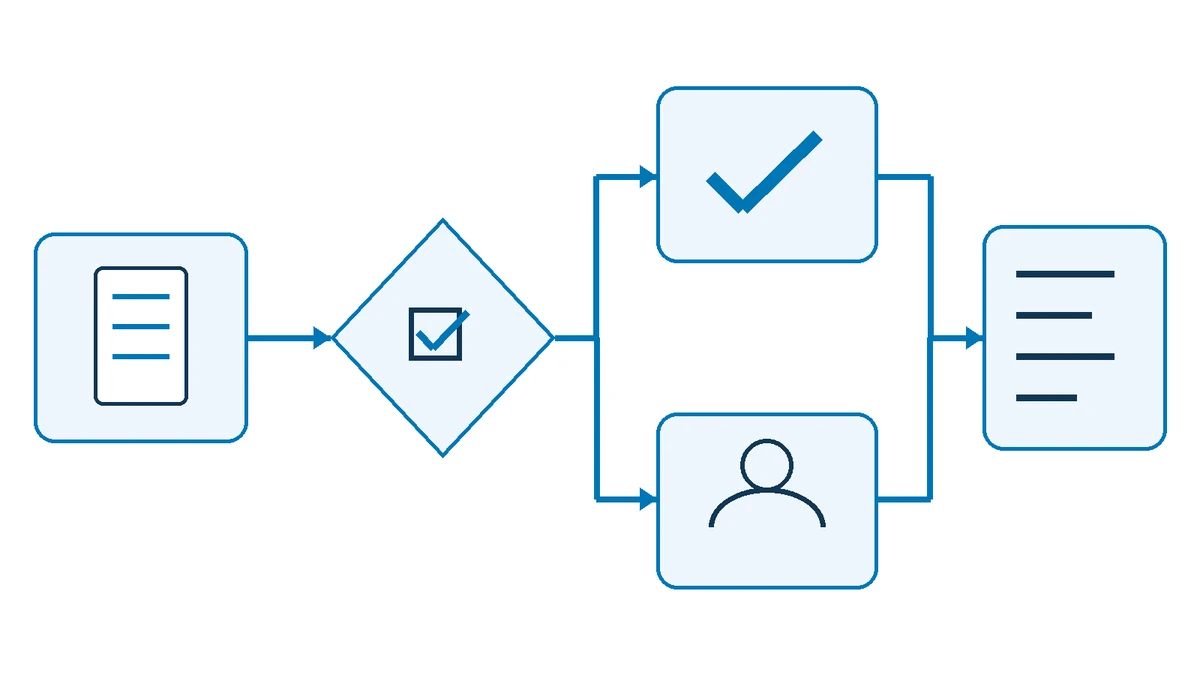
Use a scenario card to connect what the learner sees with what the supervisor can assess. This proposed training-model example needs the procedure owner's approval before development.
| Scenario element | Decision to document |
|---|---|
| Reference | Procedure name, version and approval owner |
| Starting state | A complete check record or a missing required mark |
| Expected action | Review the record, then hand over or refer for review as appropriate |
| Critical error | Bypassing a mandatory check, if the subject expert approves this classification |
| Feedback | Coaching in practice mode under the agreed assistance rules |
| Attempt record | Decision, hints, retries, completion state and scenario version |
| Result | The effect of an error, assistance or interruption on the score |
Define valid alternative paths. Two steps might be interchangeable while a verification must always precede handover. The software should reflect the approved distinction. Separate guided practice from a scored attempt and record assistance so supervisors can interpret the result.
Choose the detail, devices and access options the task needs
Start with the cues that distinguish one state from another: an object label, its position or a missing check. Agree what needs accurate modelling before expanding visual detail. An editable model for your own development team is a separate asset deliverable.
Review Arabic and English terms, reading order, spoken prompts and timing within the scene. Check that the same action receives the approved response in either language. Record the device model, accessories, application version, space and connectivity requirements, including any proposed offline use.
W3C's XR accessibility note discusses alternative input, motion and information modes. Use it to review user needs; it is not a compliance certificate. XR Accessibility User Requirements Try seated use or another control method where appropriate, and check how each alternative supports the objective. Make stopping and leaving the experience clear before the session. A learner who feels uncomfortable should be able to stop and discuss a suitable alternative with the supervisor.
Research examples: test transfer to a practical task
Virtual assembly followed by physical testing
Murcia-López and Steed's 2018 study trained 60 participants on three assembly puzzles across six conditions, then tested physical versions. On the hardest puzzle, the authors found no statistically significant difference in success or testing time between animated virtual training and the strongest physical condition. Retention after two weeks was generally below expectations. This task-specific result does not establish equivalence. Original study
A proposed Saudi technical-college pilot could use Arabic labels on a training-model assembly exercise, followed by supervised physical assessment and a delayed check. Record steps, errors and intervening practice. Use those local observations to decide whether to expand the programme.
Predefined errors and independent assessment
Seymour and colleagues' 2002 study randomly assigned 16 surgical residents to additional VR training or a comparison group. Two independent reviewers scored video of a specific part of a real procedure against predefined errors. Mean errors were 1.19 versus 7.38 per case in favour of the VR group. Interpretation is limited to the sample, skill and configuration studied. Study abstract
A proposed Saudi simulation-centre application would use fictional records in a supervised team handover exercise. A specialist defines the checks, and an independent observer records omissions during a practical simulation. This is a different exercise from the surgery studied, not a Marafei project reference or a predicted result.
Price, schedule and rollout costs
Marafei prices work to its agreed scope. Separate a pilot for one task from a programme with multiple roles or sites. Ask proposals to identify procedure analysis, scoring design, modelling, branching, languages, devices, reporting, integration, testing, supervisor onboarding and support where included.
Compare one-off development with recurring licences, staffing, device provision and updates where applicable. Estimate site capacity using the available devices and observed session, reset and supervision time. Check those assumptions during the pilot before committing to a larger rollout. A finished simulation does not remove every recurring cost.
The schedule depends on procedure readiness, complexity, configurations and review dates. Changing the procedure or scoring after development can affect scenes, reports and tests. Ask for milestones, approval dependencies and revision terms rather than a duration quoted without a defined scope.
Approve a representative pilot
- Agree the objective and observable performance with the training and procedure owners.
- Review the scenario paths and scoring rubric before implementation.
- Prototype the interaction, decision or recording rule with the greatest uncertainty.
- Have the subject expert and representative learners try it on the intended configuration.
- Record expected and actual behaviour, correction owners and deferred changes.
- Expand when the pilot meets its criteria; retest if the scoring rule changes.
Name the approver for each acceptance point. The expert may accept the procedure while the supervisor still needs a different report view. Record each decision and the corrections still required.
Interpret scores and check transfer separately
Agree correct steps, critical errors, help, retries and completion states. Include elapsed time only where it serves the objective. Specify which attempt counts and how an interrupted attempt is reported. A success percentage needs a defined cohort and denominator, not just a number on a dashboard.
Distinguish session completion, performance inside the simulation and application outside it. Assess transfer through an equivalent supervised practical task or training model using agreed observation criteria. For retention, repeat an equivalent assessment after a defined interval and record practice between checks. Results describe that exercise and cohort.
During a debrief, select a recorded decision and ask the learner to explain it. Agree what to try in the next attempt. The responsible organisation or authority decides what evidence is required for formal competence or certification; a scenario score records performance in a particular exercise.
Test the scenario and its records before sign-off
| Acceptance path | Match against the approved rubric |
|---|---|
| Correct attempt | Accepted steps, displayed result and recorded events |
| Bypassed mandatory check | Critical error and its agreed effect on the result |
| Assisted attempt | Hint record and interpretation of assisted performance |
| Interrupted session | Incomplete status and agreed resume or restart behaviour |
Log the build, device, expected result, actual result and approver. Check reset, language, prompt timing and stopping controls. Export a sample report if included. The subject expert approves procedural behaviour and assessment; the technical owner approves operation and integration. These are product-acceptance checks. Testing learning transfer requires its own assessment plan.
Learning systems and trainee data
Decide whether you need standalone reports, LMS launch and completion records, or detailed learning events. IEEE's xAPI standard describes communication of experience data with a Learning Record Store, or LRS. xAPI reference If xAPI or SCORM is required, name the version and supported workflow in the brief. A standard name does not establish compatibility with the client's system.
Trace a test account through launch, completion and the agreed result fields. For detailed events, reconcile a recorded error or hint with the receiving system. Where offline recording is included, test reconnection and check for missing or duplicate attempts. Resume and synchronisation behaviour must be demonstrated within the agreed configuration.
Agree the purpose of each trainee-data field. SDAIA's minimum-data guideline connects collection to purpose and actual necessity. Minimum personal data guidance Have the client's privacy owner confirm access, retention and applicable requirements. Use test accounts and fictional records for integration acceptance.
Handover and changes to the procedure
Specify the approved build, procedure and scenario versions, scoring rubric, tested configuration, supervisor instructions and reporting guide. Include a walkthrough in which the receiving supervisor starts a session, resets the equipment and reads an example attempt. Agree source files, editing rights, licences, onboarding and support in the proposal.
When a procedure changes, assign someone to identify affected scenes, branches, prompts, scores and reports. Approve and retest the new version. Store its identifier with results so supervisors can recognise when attempts used different scoring rules.
To discuss your training simulation scope, prepare the task, procedure version, learner role, decision to test, device constraints, languages and reporting needs. Marafei uses that brief to define a reviewable pilot and the approvals required before wider development.