

What you commission
A curator might bring an archival notebook; an exhibition producer might need to explain a manufacturing process. The design task is to decide what readers encounter first, where they can inspect a detail and how they return to the story. In a proposed archive example, a visitor opens a spread, enlarges a handwritten note, reads its transcription and resumes reading.
Scope the story map, page layouts, interaction behaviour and pilot before estimating the complete build. The proposal should identify which assets enter production, the intended playback environment and who approves each stage. Buying or hiring display equipment is a separate decision.
Is a book the right format?
A book is worth considering when page order carries meaning, or when readers need to examine details and compare states. A single message may work on a static panel. A short film may suit a sequence that everyone needs to watch in the same order.
Choose a reading outcome you can observe, such as explaining what changed between two process steps. An action should reveal useful material or let the reader make a relevant choice. Interaction counts alone cannot establish comprehension.
Uses for museums, exhibitions and learning teams
Inspect an archive item
A proposed book could reveal details from a cleared document alongside a transcription and interpretation approved by the curator. Ask visitors to find a particular mark, explain its meaning and return to the original spread. Adjust the depth and language presentation for the intended audience.
Explain a process at an exhibition
Follow a material through a process and its result. A reader opens a comparison to inspect what changed. For a short public visit, keep one primary route through the story and make the detailed explanation optional.
Explore a choice in a facilitated story
A learning team could use a character’s decision and its consequence as the focus of an illustrated story. Agree on the age range, reading mode and question that will test understanding. Record facilitator prompts so that assisted answers remain distinguishable from independent reading.
Select the delivery medium
| Option | Reason to consider it | What to confirm |
|---|---|---|
| Physical exhibit book with a display setup | Handling pages is part of the visit | Controls, content compatibility, light, reach and session reset |
| Screen or browser experience | The brief needs digital reading and navigation controls | Included scope, target devices or browsers, input and updates |
| EPUB publication | Readers will use a named reading application | Required feature support and reading order on the intended system |
| Static reading file | Linear text and images meet the goal | Legibility, accessibility and distribution method |
If EPUB is considered, agree on the target reading system before approving interactive features. Reading applications may handle the same format differently. Use EPUB 3.3 and EPUB Accessibility 1.1 as applicable references, then test the intended output.
Content needed for other channels can be scoped through the Digital Content Service, separately from the book.
Specify each spread and reader action
Map the beginning, chapter order and ending before detailed production. Separate the essential story from optional depth. A stable spread ID should connect the text, language version, assets and approval record.
For each spread, record the reader’s task, source and rights, available input, expected response, return path, fallback and approver. A comparison needs a cue that people can find, feedback when it opens and a way to close it without losing their place.
Test repeated inputs, backtracking and fast page turns. For a physical exhibit, specify what should happen if the visible spread and displayed media disagree. The remedy depends on the selected configuration; touch, gestures and page sensing should not be assumed to coexist on every installation.
Bilingual reading and accessibility
Review Arabic and English page progression, text lengths and mixed-script names or numerals separately. Pair versions by spread ID. Where the platform supports language switching, test whether readers retain their position. Have the content owner check pronunciation when narration is included.
For digital output, review reading order, keyboard operation and appropriate alternatives for images and audio. WCAG 2.2 addresses a single-pointer alternative to dragging, subject to its stated exceptions. Select the criteria that apply to the output and its controls. Digital accessibility reference.
A physical installation also needs checks for reading height, reach, glare and a companion’s position. Record the tested conditions and any assistance or changes needed. Passing a digital check does not establish the accessibility of the entire exhibit.
Interactive book implementation requirements
Bring the reading goal, audience and age range, languages and an indicative chapter count. Describe the venue or reading platform, existing equipment and launch constraints. Identify who can approve the content. One cleared extract is enough to begin a scope discussion.
Keep an asset record for manuscripts, images, translations and narration. It should identify the rights holder, permitted use and channels, languages, duration and territory, and the required alteration or exhibition permissions. Hold unresolved assets out of production and agree on replacements.
For an interactive book project in Saudi Arabia, specify the city, site and operating conditions. A Riyadh exhibition brief, for example, needs access arrangements, available space and a local coordination contact. Confirm site work and support for that location in the written proposal.
Prototype three connected spreads
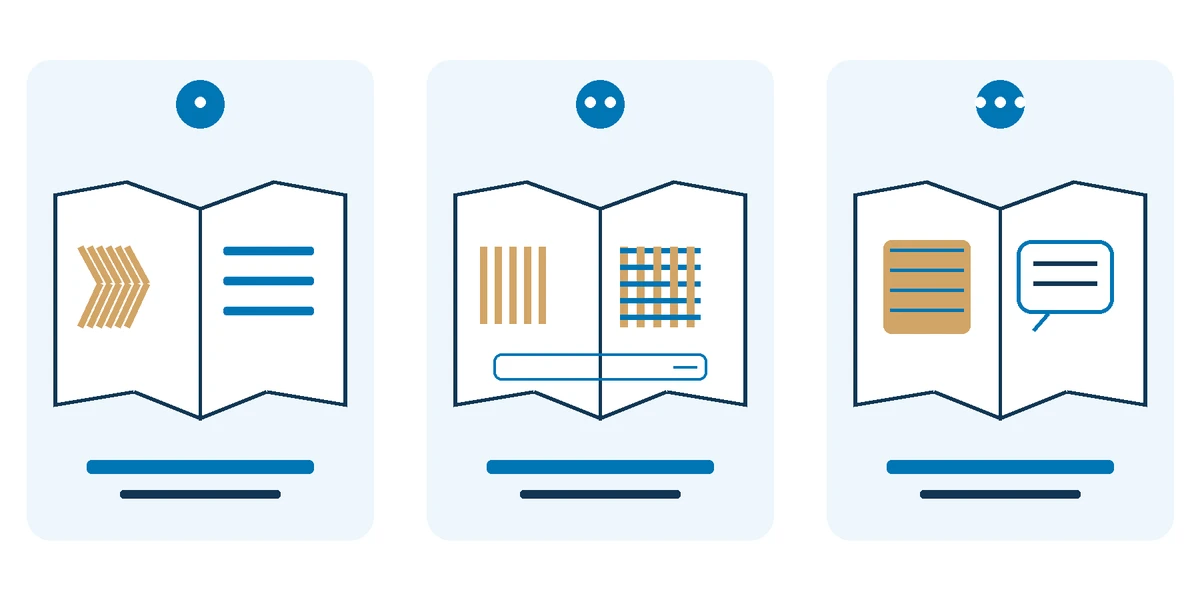
Consider this proposed pilot for a Saudi heritage or science exhibition. It tests entry, a useful reveal and the return to reading before the pattern is repeated throughout a book.
| Spread | Reader action and response | Fallback and review task |
|---|---|---|
| Introduce a material | Read the image and caption, then find the next step | Keep the essential explanation in text; ask the reader to identify the material |
| Examine a process step | Open a comparison of two states, then close it | Provide a text comparison; observe whether the reader finds the control and resumes without prompting |
| Explain the result | Connect the final image with the change | Supply a readable description; ask for an explanation and record assistance |
Run first use, backtracking, repeated actions and a fresh session. For an exhibit, add fast turns, a reader with a companion, and the intended light and sound conditions. Agree on the participants and acceptance thresholds beforehand. Log a reading difficulty separately from a playback fault.
Discuss your interactive book brief, or prepare a sample spread with its text, reader action, expected response and asset permissions.
From manuscript to handover
An interactive book development service begins by settling the reading goal, medium and responsibilities. The page map and asset review lead into a representative chapter. Its review determines which interactions are ready for production and which need to be simplified or changed.
After pilot approval, produce the agreed pages and review their languages and media. Verify the completed package in the named playback environment. Handover should identify the accepted build, files and operating or recovery instructions, plus staff orientation if included. Editable source files, modification rights and component licences need explicit terms.
Agree on acceptance before production
| Acceptance area | Observable task | Record |
|---|---|---|
| Story comprehension | Explain a difference between two stages | Question, answer and assistance |
| Discovering interaction | Open a comparison and return | Missed cues and prompts needed |
| Playback behaviour | Turn, return and repeat an input | Device, build, language, expected response and actual response |
| Repeat operation | Prepare the book for another visitor | Reset procedure, responsible person and effect on waiting |
The content owner, experience lead and operations team should agree on acceptance criteria before the test. Observe session time and queues where they affect the venue. Reaching the final page or logging many inputs does not establish the reading outcome.
Cost and lead-time factors
The amount and condition of the source material, the number of distinct page behaviours, languages, narration, media production and rights work all affect scope. Integration with an untested display, venue work and approval rounds also change what needs to be priced.
Request separate pilot and production estimates, with equipment, installation and support itemised where included. A cleared chapter on a known display has different requirements from a bilingual book needing new filming, narration and platform testing. Set the schedule in the project proposal, allowing for these tasks and the delivery of materials and approvals.
Updates and venue operation
Agree on who edits content, packages a release and retests it. Changing a caption may require a language check; changing a scene may affect narration timing or page logic. Track each release against its spread IDs, assets and languages, and name the holder of the previous accepted build.
Check whether assets, licences or functions depend on connectivity before agreeing to offline operation. A temporary exhibit needs setup and recovery arrangements around its opening date. A permanent installation also needs a maintenance and update process. Define support duration, change allowances and escalation responsibilities in the agreement.
External examples and possible Saudi pilots
Looking closely at Chopin’s diaries
Ewa Drygalska’s 2024 paper in the Journal on Computing and Cultural Heritage describes digital diaries at the Fryderyk Chopin Museum in Warsaw. Visitors could turn and enlarge pages with transcriptions, translations and commentary while the originals remained in display cases. This field study concerns one museum; it does not estimate a general learning benefit. Chopin Museum study.
A Saudi museum could test two cleared spreads from a local notebook, with Arabic transcription and English interpretation. Ask visitors to locate and explain a note, then return to the original page. The curator should also review how the screen sits beside the object. This is a proposed adaptation, not a Marafei project.
Visual and audio additions to children’s stories
Sarı and colleagues’ 2019 randomised trial involved 99 children aged 4–6 at two kindergartens in Bursa, Turkey. Visual additions benefited story comprehension, with no measured vocabulary-learning benefit. Background music and sounds did not improve comprehension and had a negative effect on receptive vocabulary. These findings concern the study’s sample, materials and conditions. Digital storybook trial.
For a Saudi learning team, a proposed pilot could compare a short Arabic story with a plot-relevant visual change against the same story with a static image. Keep other elements similar, ask children why the change occurred and record distraction and adult prompts. The pilot would test the local material; it would not assume the study’s result or its applicability to exhibit hardware.
Compare providers and request a scope
When choosing an interactive book provider, compare deliverables and a representative reading sequence. Establish who supplies and clears the assets and who verifies compatibility. The proposal should specify pilot and production acceptance, included revisions, file ownership and support, with equipment priced separately from content.
To discuss interactive book services with Marafei, bring the reading goal, intended audience, languages and venue or playback platform. A cleared sample can help resolve the pilot before a full production estimate. Discuss your interactive book brief.