

What should your ceremony organizer deliver?
A ceremony brief gives reception staff, the stage team and suppliers instructions based on the host's approved decisions. Start with the occasion and the responsibilities you want to delegate. The host or its authorized representative approves precedence, names, titles and public messages.
Ask for a versioned operating pack suited to the event: a responsibility matrix, running order, recipient register, stage cue sheet, rehearsal plan and change log. For each deliverable, specify who prepares it, who signs it off and when the operating team receives the approved version. Venue booking, catering, photography, streaming and production belong in the proposal as explicit items when required.
For an event with parallel sessions, delegates or exhibitors, define a separate exhibitions and conferences organizing brief. Assign an interface between the conference team and the team responsible for its formal opening or awards segment.
Which occasions need a formal ceremony plan?
An official opening needs an agreed host, speaking order and opening action. The reception plan must connect the arrival of guests with the moment they are required at the ceremony location.
An awards or recognition ceremony needs approved categories, recipients and presenters. Those decisions determine how awards are arranged, who enters the stage next and where the photo takes place. Selection and eligibility remain with the awarding institution.
A university or school graduation adds cohort movements, accompanying guests and certificate checks. Academic approval and degree conferral are separate from the operating task of calling names and handing over documents.
A corporate gala, company anniversary celebration or annual event may include speeches and a formal recognition segment. Describe those proceedings separately from dining, social activities or entertainment. The distinction helps vendors price the actual program and makes responsibility for each workstream clear.
Who approves protocol and who runs the event?
Name the person authorized to resolve conflicting instructions. Teams should know which decisions they can make and which require approval before anyone changes a seat, an honorific or the order of proceedings. Adapt this proposed allocation to the host's structure and contract.
| Owner | Approval or review | Operating handoff |
|---|---|---|
| Host representative and protocol lead | Precedence, titles, seating and exceptions | An approved decision with its version and effective time |
| Communications and awards committee | Scripts, identity, recipient details and publication permissions | Approved MC text, screen assets and recipient register |
| Producer and stage manager | Operating plan, rehearsal and cue coordination | Running order, fallback actions and named team leads |
| Venue and suppliers | Site rules, access, equipment and handback | Reviewed layout, work windows and test results |
The University of Tabuk describes official receptions, hospitality and seating, guest guidance and coordination among its Protocol and Reception Department's responsibilities. It is an institutional example of a protocol role; your host must approve the authority assigned within your own event. University of Tabuk Protocol and Reception Department.
How will guests move through the ceremony?
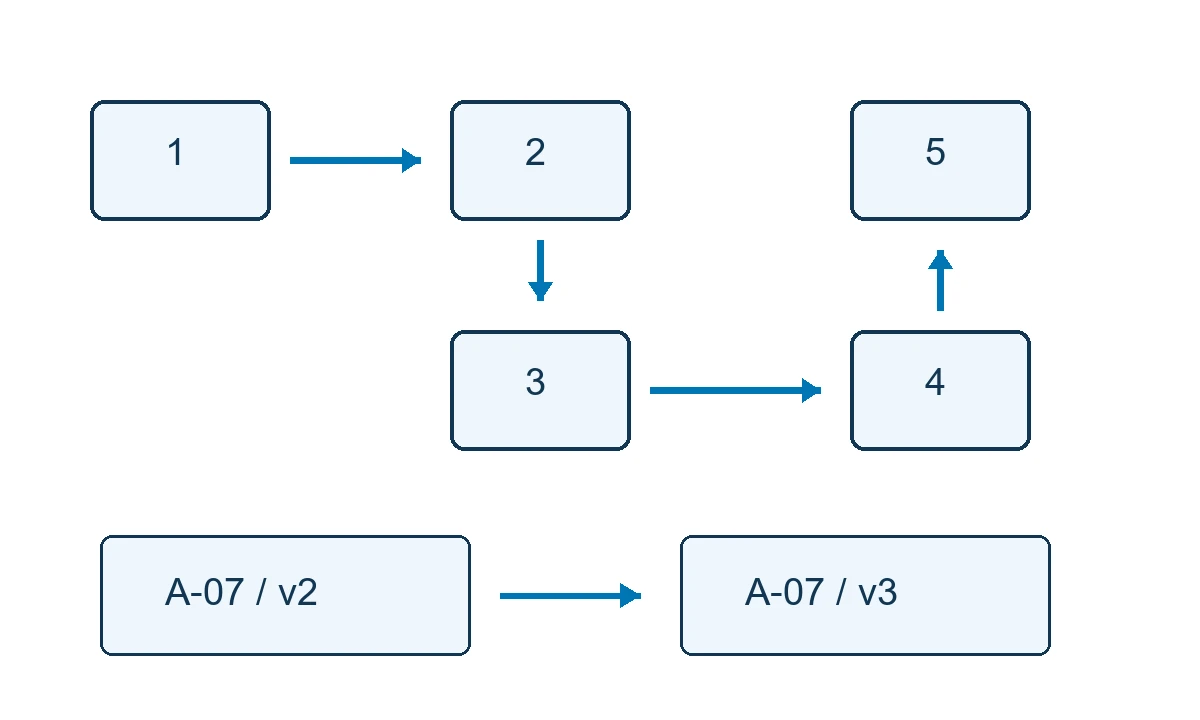
Connect attendance confirmation to reception, seating and departure. Decide who receives a visiting delegation, handles an additional companion and requests a decision when a principal guest arrives late. Reception staff need a way to escalate an exception while the current program continues.
In the conceptual journey, point 1 is reception, 2 is seating, 3 is the recipient holding area, 4 is the stage and 5 is return and departure. Guests move from reception to their seats. When called, recipients use the holding area, proceed to the stage and return by the agreed route. Review where waiting and returning groups might meet. Check access to seating, facilities and the stage for anyone who needs assistance. The actual venue layout is needed to approve these arrangements.
Walk the route with a reception representative, a stage supervisor and venue staff. Record who hands each group over and who provides assistance. Keep circulation routes clear when handling a reception exception, and obtain approval before changing a reserved seat.
How do you keep the script, screens and stage cues aligned?
Give each segment a stable ID linking the spoken name, display name, media asset, physical award and stage action. Add the planned duration, approver, version and authorized fallback. The stage manager needs a clear confirmation before releasing each cue.
| Cue record | Illustrative entry |
|---|---|
| ID and category | A-07, team recognition |
| Recipient and pronunciation | “Salem Example”, a fictional name; the host approves names, titles and pronunciation |
| Script and display | Version 2 in the MC script and screen card, with an approved Arabic counterpart where needed |
| Action and award | Call from holding area, confirm award A-07, then wait for the stage manager's cue |
| Change or fallback | If absent, obtain approval to skip the slot or receive an authorized substitute; affected teams acknowledge the change |
Set a file-freeze deadline and a version owner. A corrected honorific in version 3 needs to reach the MC text, screen card and any printed material it affects. Withdraw superseded copies from the operating team. Ask each affected lead to read back the authorized action before proceeding.
For a bilingual program, agree written names and pronunciation in both languages. Translated screen assets and scripts are different deliverables from live interpretation, which needs its own scope, operators and technical check.
What changes for awards and graduation ceremonies?
For awards, reconcile category, recipient and physical item before forming the queue. Identify who hands over the award, who calls the next recipient and when photography begins and ends. Rehearse an absence: the award handler needs to know whether to retain the item or prepare it for an authorized substitute.
For graduation, the institution approves eligibility and cohort lists. Assign a supervisor who checks each cohort and authorizes its movement. If several faculties take part, define the handoff between the central ceremony team and each faculty's staff. Agree an accessible alternative for anyone unable to use the usual stage route.
Resolve name discrepancies at a check point before the person is called. The recipient should not have to correct the public announcement on stage. Send an approved revision to the stage manager through the agreed channel.
How should national occasions and symbols be reviewed?
Identify whether the brief concerns Saudi National Day, Founding Day or another institutional occasion, and confirm the year before choosing identity assets. Review the occasion's identity alongside the host's brand on invitations, screens and signs before production. Historical slogans and files need a deliberate review before reuse.
If flags, an anthem or visiting delegations' national symbols form part of the program, have the host's protocol lead confirm the applicable rules, placement and operating cues. Approve the actual proceedings for the occasion; a previous event's program is not an automatic template for the next one.
What must the venue and production teams confirm?
Review approved capacity against the actual seating and stage layout. Include sightlines, circulation, camera positions, technical desks and supplier access. Check the route to the stage, including accessible access where required, before approving the layout.
Confirm setup, rehearsal and dismantling windows. Assign responsibility for power, connectivity when needed, sound, screens and communication between the stage manager and operators. Recording or streaming requires a defined capture area and agreement on any restricted coverage.
The Saudi Building Code Center describes SBC 801 as covering fire protection and emergency and evacuation plans. Ask venue and safety specialists to confirm the requirements applicable to the proposed layout. Accessibility requirements need their own review by the appropriate owner. Saudi Fire Protection Code SBC 801.
What happens from the brief to handover?
Agree the purpose, date, location and initial attendance estimates, then review the venue and supplier boundaries. Confirm program and recipient approvals before freezing production files. Each decision needs an owner and cutoff: a late name approval can affect a certificate, screen asset and the time available to repeat the cue check.
Test equipment and files in a technical rehearsal, followed by the people, movements and decisions in a ceremony rehearsal. Record the readiness decision and any issue that still blocks an affected segment. During delivery, maintain an exception log showing the change, approver and version issued to teams.
Closeout may include the executed running order, agreed supplier reconciliation, venue handback and authorized media. Specify these deliverables and their acceptance owner in the proposal. Agree how retained guest files will be handled after the event.
What drives cost and makes proposals comparable?
Give vendors the same occasion, venue constraints, attendance estimates, language requirements, program and rehearsal assumptions. Separate organizer fees from venue hire, direct supplier charges, staffing, production, hospitality and coverage. Record who contracts with and pays each supplier.
Adding a bilingual awards segment may change script preparation, screen assets, name reviews and rehearsal hours. Ask the vendor to identify the resulting work and cost before approving the change. Review overtime, postponement, cancellation and non-refundable commitments under the proposed contract.
For a formal ceremony in Riyadh or another Saudi city, share the same venue access windows, booking status and technical scope with each bidder. Location is a project input; it does not establish team availability or a standard price.
Share your ceremony brief, including the workstreams you want priced, to prepare a comparable proposal.
What should pass at rehearsal before doors open?
Agree acceptance criteria before testing. Use fictional names for training that does not require personal data, then reconcile the actual approved records through the authorized channel. Rehearse the complete segment, including how a change is approved and acknowledged.
| Test scenario | Required decision | Evidence that the issue is closed |
|---|---|---|
| Absent recipient | Skip the slot or approve a substitute | MC text, screen, physical award and stage order agree |
| Corrected honorific | Approve and distribute the replacement version | MC and screen operator read from the same approved record |
| Delayed speaker or delegation | Authorize an alternative segment or reception arrangement | Reception and stage teams acknowledge the revision while the current cue remains controlled |
| Failed microphone or media file | Use the agreed backup or pause the segment | Repeat test succeeds and the restart authority is known |
Record what happened, who accepted the correction and the result of the repeat test. A program revision after rehearsal may invalidate a previous check. Retest the affected transitions and materials before using the revised sequence.
Who checks approvals, guest data and media rights?
Assign responsibility for checking current requirements against the actual activity, audience and venue. The label “formal ceremony” alone does not establish a permit route or exemption. Distinguish the relevant authority's decision from the organizer's coordination of supporting documents, and include ownership and deadlines in the contract.
Article 19 of the Personal Data Protection Law's Implementing Regulation addresses collection and retention of the minimum personal data needed for the purpose. Review why each guest-list field is needed and who may access it with the responsible privacy lead. Separate restricted contact and reception information from names cleared for publication; agree access, sharing, retention and deletion. Implementing Regulation of the Personal Data Protection Law.
For photography and streaming, specify coverage, notices and permissions, restricted areas and subsequent usage rights. Publication and marketing reuse need their own authorization, separate from access to a list for event operations.
What can buyers learn from documented ceremonies?
Harvard: central proceedings and separate diploma ceremonies
Harvard documented its 374th Commencement on 29 May 2025. Its Commencement Office explains that candidates and guests return to their Houses or Schools after the Morning Exercises for individual diploma-awarding ceremonies. The example shows a program divided between central proceedings and smaller arrangements; it does not establish a measured improvement in waiting times or attendee satisfaction. Harvard's 2025 Commencement report and guidance for graduates.
For a proposed Saudi university ceremony, separate central approvals from faculty responsibilities. Walk two fictional cohorts through the handoff, verifying that each supervisor receives the correct list and knows who resolves a rerouting decision. Acceptance should cover completed handoffs and matching records, with timing criteria set after checking the site. Annual degree totals must not be treated as ceremony attendance.
Saudi awards: organization, category and award level
The General Secretariat of Zakat, Tax and Customs Committees reported recognition at a Riyadh ceremony on 22 June 2025 for attaining the bronze level in the government-sector category of the King Abdulaziz Quality Award. The report documents the recognition and classification, without describing the organizer's stage process. King Abdulaziz Quality Award recognition.
For an institutional awards program, give organization, category, level and receiving representative separate fields. Rehearse with two fictional organizations whose names are similar, and compare each screen card with the physical award and MC text before the call. This is a proposed check against mixed award records, not an account of that ceremony's operations or a Marafei project.
How do you scope and accept a ceremony with Marafei?
Share the organization and a work contact, occasion, city, fixed date or window, venue status, estimated guests and recipients, languages and requested workstreams. Describe protocol requirements at first contact. Detailed identities and sensitive reception files can follow through an approved channel when needed.
Ask the proposal to connect each item with a deliverable and approver: the operating program, cue register, rehearsal record, exception log, venue handback and rights-cleared media as contracted. Select checks that serve your event, such as segment start-time variance, name corrections and closure of rehearsal issues. Agree who records each result and how the host accepts it. Attendance alone does not establish whether the ceremony achieved its purpose.
Discuss your ceremony scope and deliverables with Marafei to define planning, organization and delivery around the host-approved program and protocol.