Skip to content

Immersive learning · Interactive content

Virtual Reality in Education

A learning experience using virtual reality to make abstract or hard-to-visualize concepts explorable through a structured scenario with a defined learning purpose.

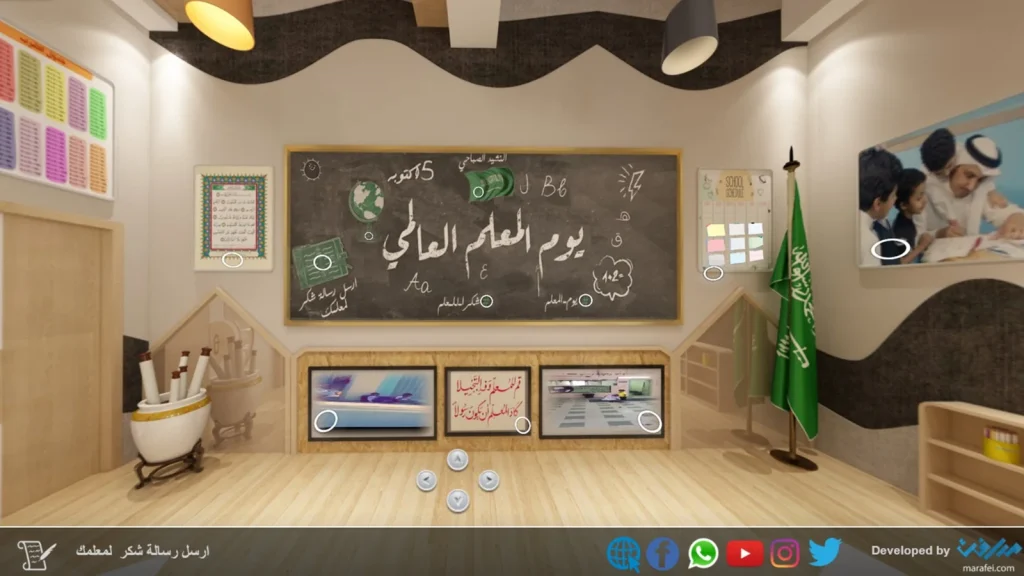
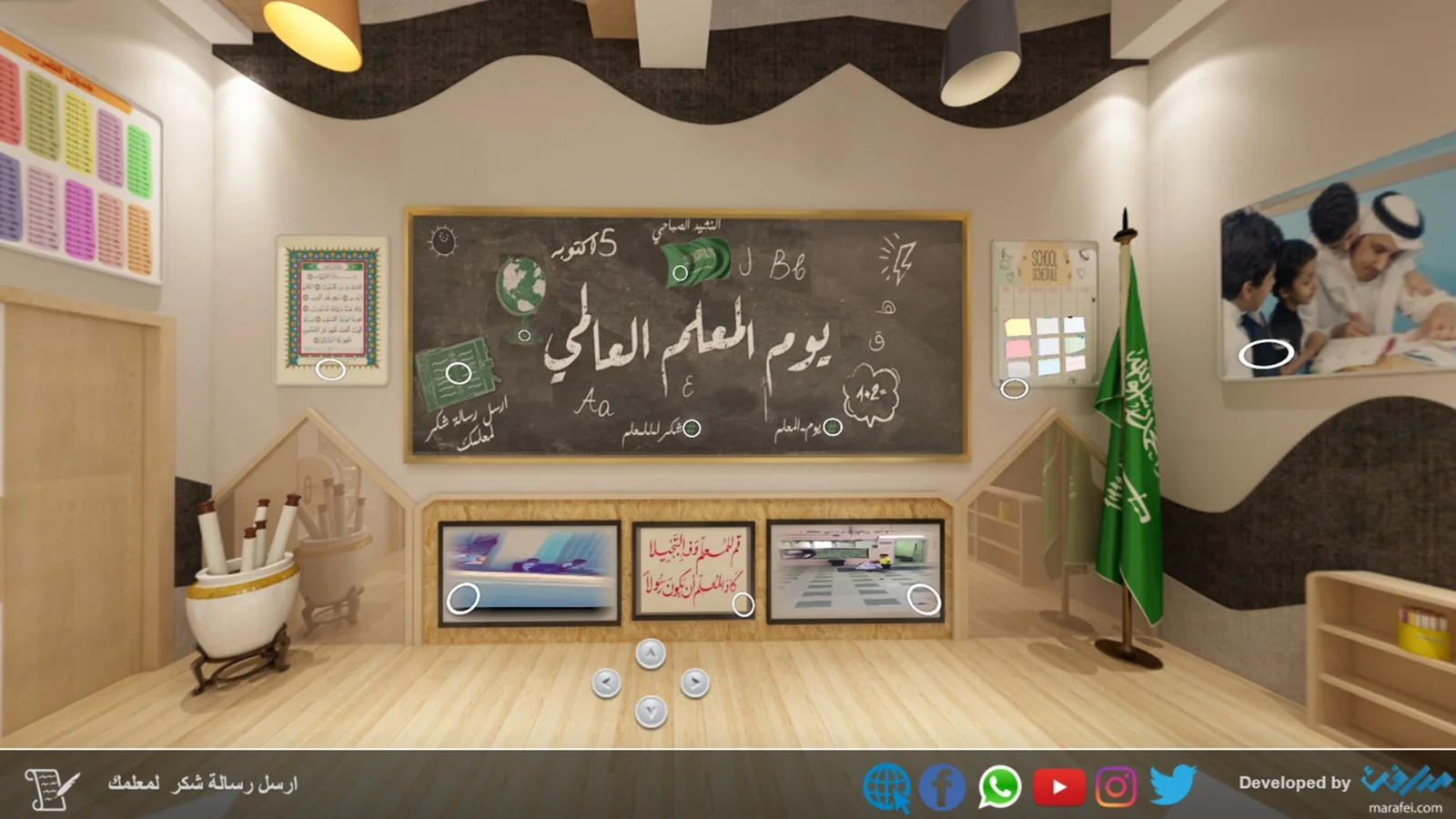
Interactive virtual classroom interface displaying Saudi Flag Day and educational materials
Experience valueTurning observation into concept-led exploration
  • Project typeVirtual-reality learning experience
  • FieldEducation and training
  • Source topicsChemistry, physics, and biology
  • Content modelInteractive scenario

Project foundations

A scientific concept becomes a space to explore

The source describes scientific subjects becoming virtual-reality experiences and gives the example of exploring the components of an animal cell.

Design starts with the learning objective, then selects the scene and interaction that help learners notice a relationship, sequence, or structure that is difficult to communicate in a static format.

Immersion is not treated as proof of learning. Curriculum fit, session length, guidance, assessment, device compatibility, and a non-immersive alternative remain requirements to confirm with the education owner.

Goal

Making a complex concept observable and explorable

Build a learning journey connecting exploration to required knowledge points and giving the teacher or operator a clear way to guide the session.

Target outcome

An interactive scenario with a learning objective, instructions, sequence, and closing review, plus an agreed way to check understanding when available.

  • Learning-objective mapEvery interaction tied to a required concept or skill.
  • Experience scenarioOpening, tasks, feedback, and close designed for the session duration.
  • 3D or visual contentDefined after reviewing curriculum, references, and rights.
  • Guidance and operationInstructions for learner and teacher plus alternatives for people who cannot use immersive display.
Interactive virtual classroom interface displaying Saudi Flag Day and educational materials
Experience videoNo video source has been provided yet

Video

Watch the learning route

This area is reserved for a verified scenario demonstration or operating guide and loads only after user interaction.

No verified video was supplied, so generic footage must not be presented as project documentation.

Request a Project Demonstration

Project album

Scenes from the learning experience

Only approved project captures are shown, with enough context to explain what the learner is seeing.

Case study

From learning material to an experience with purpose

These remain verification requirements, not claims of an implemented or measured outcome.

An editorial analysis of how a broad description can become a journey that begins with a learning objective and ends with a clear review.

The project at a glance

The project proposes moving selected scientific concepts from abstract explanation into immersive exploration. Effective design depends on objective clarity, content accuracy, appropriate interaction, and a method of checking understanding—not on the technology alone.

1

Challenge

Use immersion to explain a real concept rather than create a visually impressive scene with no defined learning result.

2

Goal

Build a scenario that directs attention to the required concept and fits the session duration, venue setup, and role of the teacher or operator.

3

Requirements to verify

These remain verification requirements, not claims of an implemented or measured outcome.

Solution approach

Learning led by a task, not a visual effect

The experience is organized around a question or task, with feedback delivered when the learner needs it.

  • Content accuracyScientific material needs review by a curriculum owner or subject specialist.
  • Define the objectiveState what the learner should notice or explain after the session.
  • Comfort and accessSession length, movement, and alternatives must reflect the audience.
  • Design the taskTurn the concept into an action or decision in the environment.
  • OperationHardware, hygiene, support, and supervision are requirements to resolve during discovery.
  • Provide guidanceUse concise instructions and feedback to reduce distraction.
  • Close the loopEnd with a review or question connecting the experience back to the lesson.
  1. Analyze the materialConfirm audience, objective, references, and lesson boundary.
  2. Design the scenarioBuild the route, interactions, and feedback.
  3. Produce and integrateImplement content and connect it to hardware and operation.
  4. Review and trialTest accuracy, comprehension, comfort, and accessibility with representative users.

Expected value

  • Structures or relationships become easier to inspect.
  • Learners perform a task rather than only watch.
  • A clear session path for the teacher or operator when approved.
  • Future checks can be added without claiming unmeasured improvement.

Evidence boundary

The local source names chemistry, physics, biology, and customizable learning content, but supplies no curriculum, client, platform, or impact study. This is editorial framing, not evidence of improved attainment or completion of a specific scenario.

The local source names chemistry, physics, biology, and customizable learning content, but supplies no curriculum, client, platform, or impact study. This is editorial framing, not evidence of improved attainment or completion of a specific scenario.

Have a concept that is difficult to explain on a flat screen?

Share the learning objective, audience, and operating context so the right medium and evidence plan can be defined.

Discuss Your Project with Marafei
Interactive virtual classroom interface displaying Saudi Flag Day and educational materials

Don’t hesitate to
contact us.

You can book a demo with us by filling out this information, and we will get in touch with you as soon as possible

Business Hours

Sunday–Thursday
8:00 AM–6:00 PM