
Skip to content

Environment · Interactive exploration

Environmental Explorer

A conservative framework for a digital experience that makes environmental topics explorable through observation, comparison, and scenarios without inventing a client, location, technology, or implemented content.

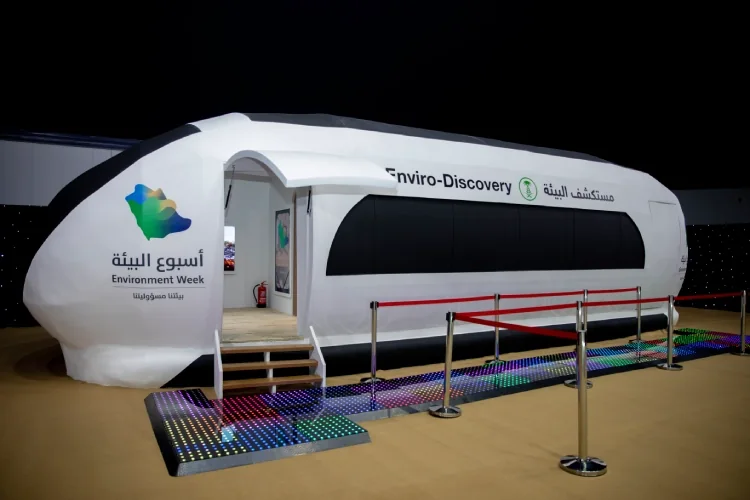
Environment Explorer mobile pavilion at Environment Week with an illuminated entrance
Experience valueTurning an environmental concept into a relationship visitors can see and trace
  • Project typeEnvironmental discovery experience
  • FieldEnvironmental awareness and learning
  • Content modelHabitats, relationships, and scenarios
  • Evidence statusImplementation details pending verification

Project foundations

The environment is a network of relationships, not a list of facts

The project is titled Environmental Explorer, but both Word files mistakenly repeat Arabic-calligraphy exhibition copy. This is therefore a conservative editorial framework for what a genuine environmental experience should communicate, not a history of delivered work.

An approved environmental subject—such as a habitat, water cycle, or consequence of an everyday choice—can become a route asking visitors to observe, compare, and infer a relationship.

This copy names no species, region, climate dataset, percentage, or policy target. Every scientific and spatial statement needs a source and review, and every scenario must disclose the limits of simplification.

Goal

Building evidence-led environmental curiosity

Turn a verified environmental subject into a journey that helps visitors see relationships and ask questions without overstating the experience's impact.

Target outcome

An interactive route with a defined subject, explicit sources, observation and comparison stations, and a closing scenario labelled as educational exploration rather than scientific prediction.

  • Environmental subject mapThe phenomenon, elements, and relationships defined from owner-approved references.
  • Discovery stationsScenes or modules prompting observation and comparison before explanation.
  • Impact scenarioOne variable changed to show a simplified educational result with model limits disclosed.
  • Access and sourcesText alternatives, reading keys, and attribution for information used.
Environment Explorer mobile pavilion at Environment Week with an illuminated entrance
Experience videoNo verified video source has been provided

Video

Watch the discovery method

This area is reserved for a tour of an implemented version or authorized scientific explanation and loads only after interaction.

No valid environmental-project video or documentation was supplied, so generic material must not be substituted.

Request a Project Demonstration

Project album

Scenes from environmental exploration

No image is displayed until its project relationship, subject, rights, and alternative description are verified.

Case study

From an unsupported project name to a responsible experience framework

These remain verification requirements, not claims of an implemented or measured outcome.

This study does not claim to describe an existing implementation; it defines how a verified environmental topic should become a learnable and testable experience.

The project at a glance

Because the project-specific source is invalid, the editorial layer stops at a conservative framework: an approved subject, clear relationships, observation-led interaction, and explicit model limits. No platform, display, XR feature, dataset, or outcome is attributed to the project.

1

Challenge

Correct the content mismatch without filling the gap with new claims, while leaving useful structure for the content owner to complete when evidence arrives.

2

Goal

Provide an editorial structure for a genuine environmental explorer that separates scientific fact from educational simplification and keeps implementation details pending verification.

3

Requirements to verify

These remain verification requirements, not claims of an implemented or measured outcome.

Solution approach

A framework that begins with evidence and ends with a reviewable question

The experience starts only after subject, sources, and audience are approved, then moves through observation, comparison, explanation, and a bounded scenario.

  • Invalid sourceBoth Word files repeat unrelated calligraphy content and cannot evidence the project.
  • Approve one subjectSelect a habitat, phenomenon, or behavior rather than attempting to cover the whole environment.
  • Scientific integrityEvery relationship, number, or map needs an expert source and update date.
  • Map relationshipsShow only elements and links supported by the source.
  • Avoid misleading simplificationAn educational scenario must disclose limits and never promise scientific prediction or impact.
  • Design discoveryPrompt observation and comparison before presenting explanation.
  • Declare limitsState what the model simplifies and what cannot be inferred.
  1. Recover evidenceRequest the actual project description, references, media, and content owner.
  2. Scientific reviewApprove information, language, and model boundaries.
  3. Design and produceBuild stations, interaction, and alternatives with verified technology.
  4. Test and inspectReview comprehension, accessibility, accuracy, and any real measurement.

Expected value

  • The calligraphy/environment mismatch is removed from public copy.
  • Editorial proposals are not presented as project history.
  • Fields can be completed when the correct source arrives.
  • Required evidence is explicit before publishing media, technology, or outcomes.

Evidence boundary

The Arabic and English Environment Explorer DOCX files repeat Arabic-calligraphy exhibition copy and contain no valid environmental-project description. All content here is a proposed editorial framework only; it proves no client, implementation, technology, location, scientific content, or result. Detailed claims must remain withheld until a correct project source is supplied.

The Arabic and English Environment Explorer DOCX files repeat Arabic-calligraphy exhibition copy and contain no valid environmental-project description. All content here is a proposed editorial framework only; it proves no client, implementation, technology, location, scientific content, or result. Detailed claims must remain withheld until a correct project source is supplied.

Have an environmental subject that needs evidence-led exploration, not broad slogans?

Start with the scientific source, audience, and question visitors should leave with, then choose the right medium and interaction.

Discuss Your Project with Marafei
Environment Explorer mobile pavilion at Environment Week with an illuminated entrance

Don’t hesitate to
contact us.

You can book a demo with us by filling out this information, and we will get in touch with you as soon as possible

Business Hours

Sunday–Thursday
8:00 AM–6:00 PM