

What does the printing service deliver?
You receive a physical part made to the approved requirements. An appearance model and a cover used to check fit on a mount need different acceptance criteria. Define the purpose before choosing a material or requesting a price.
Agree which tasks the quote includes: file review, any repair, a first sample, finishing, inspection and packaging. Creating a design, scanning an object and supplying editable files are separate items to discuss. A photograph can explain the intended object, but a manufacturing model and its dimensions still need approval.
Process, material, dimensions, quantity and timing are reviewed for each order. The industrial methods discussed here help you specify a request; availability of a particular process or grade requires confirmation in Marafei's proposal.
When should you compare printing with another method?
Consider printing for a sample that informs a design decision or for a small noncritical batch. During development, identify the revision you want to print and the decision you will make after inspecting it. Recurring production also requires comparing setup costs and the cost of accepted parts across the required quantity.
Compare printing, CNC machining and moulding against the same material, tolerance, finish, quantity and deadline. Tooling, inspection and post-processing can change the comparison. NIST's economic review discusses additive manufacturing cost drivers; its historical figures are not current Saudi prices. NIST cost study.
Request each method's assumptions and deliverables. A single break-even quantity cannot cover every geometry and material.
Appearance models, display replicas and fit checks
| Request | Information needed before production | Suitable acceptance decision |
|---|---|---|
| Product appearance model | Visible faces, scale, colour and display arrangement | Appearance matches the approved reference under agreed viewing conditions |
| Architectural or educational model | Design permissions, features to preserve and display mount | Required details remain legible and the model fits its mount |
| Noncritical fit-check prototype | Critical dimensions, mating part and required clearance | Measurements and an assembly test meet the defined purpose |
These are scoping examples. Technical review establishes whether the file, material and proposed process suit the intended use. An accepted visual model does not qualify the same object for untested loads, temperatures or functional use.
Choose the process and material around the part
Additive manufacturing families include material extrusion, vat photopolymerization and powder bed fusion. Extrusion builds deposited material in layers; vat photopolymerization cures resin with light; powder bed fusion selectively fuses regions of a powder layer. NIST process overview.
| Industrial option | Question for the comparison | Evidence to request |
|---|---|---|
| Material extrusion | Where will layers and support marks fall relative to important faces? | A sample using the proposed grade, orientation and finish |
| Vat photopolymerization | Do detail, surface and properties after treatment suit the use? | Resin grade, treatment steps and the relevant use test |
| Powder bed fusion | Do the material, powder removal and finishing suit the part? | Defined process, material and finished-part inspection criteria |
Describe temperature, sunlight, moisture, handling and mounting conditions. Ask for the actual material grade's data and an evaluation suited to the intended task. A generic polymer name does not establish the properties of a printed object. NIST's polymer testing review explains why process and build direction matter when evaluating properties. NIST polymer materials report.
Prepare the file and part brief
Provide a part identifier, file revision, unit, overall dimensions, quantity and intended use and environment. Identify visible faces, mounting points and critical dimensions in a reference drawing. State whether there is a mating part available for a fit check.
STL, 3MF and STEP are formats to discuss against the supplier's workflow, not an automatic acceptance list. The 3MF specification includes a model unit for interpreting measurements. Confirm the imported size against an agreed reference dimension before production. 3MF Core Specification.
If geometry needs repair, agree the proposed change and who approves the resulting revision. If you only have a sketch or image, scope modelling and dimensional approval before finalizing fabrication. Start with a non-sensitive description and agree a suitable transfer channel before sharing confidential design files.
Specify tolerance, clearance and fit
Layer height is a build setting. A dimensional tolerance is the acceptable range around a required finished-part dimension. Assembly clearance describes the intended gap between mating parts and depends on the reference part and the required movement or fastening.
For a display cover with two mounting holes, identify the measurement reference, hole positions and assembly criterion. The finish could pass while the holes miss the mount's pattern. Record those results separately and hold batch approval until the corrected revision has been checked.
Review orientation, wall thickness, supports and treatment with the supplier. Specify which dimensions are inspected after finishing and use a physical fit check where the interface matters. Direction-dependent properties also need consideration in material evaluation. NIST polymer testing review.
Agree scale, colour and finish
Identify the faces visitors will see and the details that must remain clear at the chosen scale. Discuss visible layers, support marks and any sanding, coating or assembly included in the quote. Set a colour reference and viewing method; a screen image alone does not settle sample acceptance.
If a model exceeds the available build volume, ask whether its geometry permits segmentation. Agree joint locations, alignment, assembly and the finished-size check, including which seams may remain visible. The supplier should confirm feasibility and cost before you approve that option.
Check fit after any finish that could affect mating surfaces. For a display model, inspect appearance under the agreed lighting and display conditions, then retain the approved sample or its reference with the order record.
Approve a first sample when the decision needs one
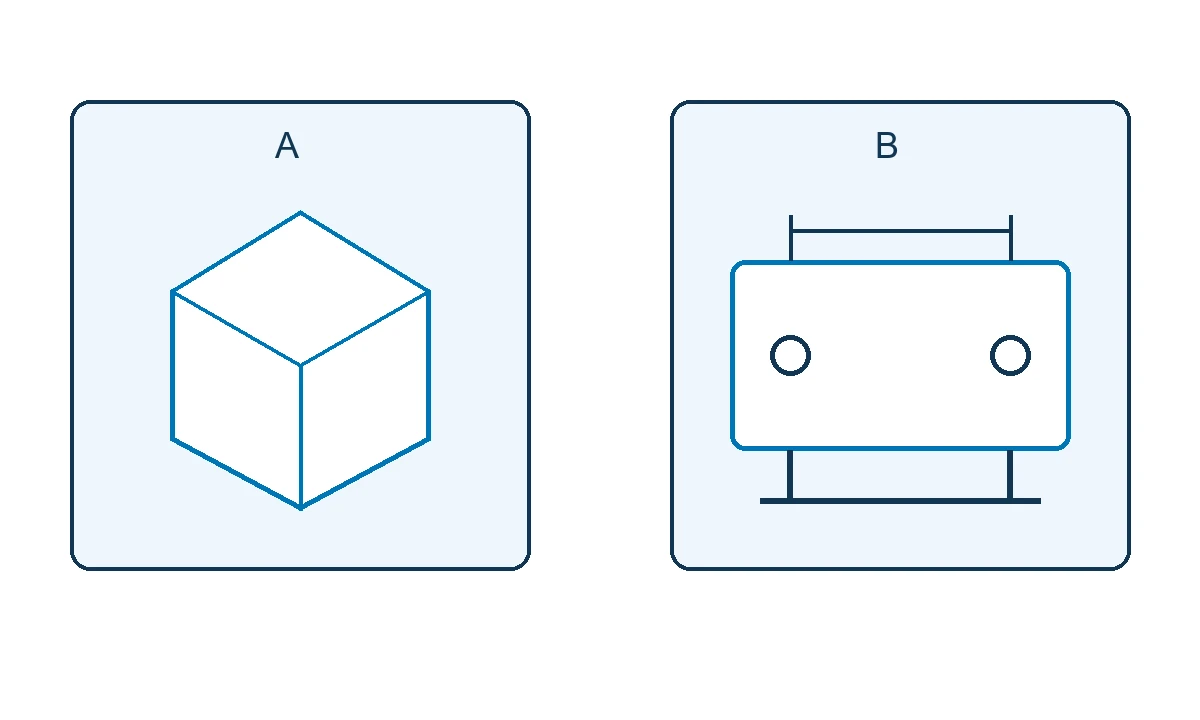
Request a sample when fit or appearance determines acceptance, when trying an unfamiliar material or finish, or before a repeat order. Decide whether to print the whole part or a section testing a critical interface. Record what that limited sample does not test.
| Sample record | What to capture |
|---|---|
| Identity | Part identifier, file revision, material and finish |
| Inspection feature | Dimension, surface or mating interface being checked |
| Reference | Approved drawing or reference sample and buyer's acceptance criterion |
| Method and result | Instrument and measurement location or assembly test, followed by the actual result |
| Decision | Approver, action on a discrepancy and revision authorized for repetition |
Appearance approval does not automatically cover assembly dimensions. If geometry, material or treatment changes, the acceptance owner identifies what must be tested again before extending an earlier approval.
From request review to delivery
The team first reviews the intended use, model and units, then identifies missing information needed for a quote. Process, material, finishing and inspection are scoped, with a sample priced where requested. The buyer approves the revision, requirements and quantity before production.
Manufacturing is followed by the agreed finishing, inspection, packaging and delivery. Set dates for file and sample approval and allow time to review results. A late decision may change the production schedule. Request an order-specific date that covers these stages and any freight, rather than machine time alone.
Hold the affected task when a unit, essential requirement or manufacturing permission is missing. Document a later change under a new revision with its approved cost, timing and inspection effects.
What determines the printing quote?
Request a breakdown of file work, material, build time, quantity, supports and removal, finishing, inspection, packaging and freight. Inclusion depends on the commission. Use the same revision, material, finish and inspection scope when comparing suppliers.
Parts of equal weight can differ in setup, support removal or finishing work. A per-gram rate therefore describes only part of the cost of an accepted part. NIST's economic review discusses machine, material, labour and processing factors; use it to understand the comparison, without applying historical prices to a current order. NIST additive manufacturing economics.
Separate the first sample from the batch price and ask how another revision will be charged. When comparing custom 3D printing in Saudi Arabia, confirm the delivery point, packaging, transport and available dates for the actual order, including requests in Riyadh or Jeddah.
Inspect the batch and agree reprint terms
At handover, match quantity, revision, material and finish to the order, then complete the agreed dimensional, surface and assembly checks. Establish whether all parts or an agreed sample will be inspected and which records must accompany delivery. Keep the approved reference for later batches.
If a measurement is outside the agreed range, review the drawing, method and condition of the part after finishing. Record the discrepancy before deciding on rework or reprinting under the proposal's reporting and remedy terms.
A part that misses an approved requirement and a design change requested after approval need different treatment. The agreement should identify who reviews each case and how any work, cost and schedule effects are handled. Free reprints or guarantees are not assumed.
Design rights and intended-use limits
Confirm permission to manufacture, reproduce and display the design, including third-party logos or elements. The Saudi Authority for Intellectual Property describes industrial-design protection as covering a product's visual appearance. Possession of a downloaded file does not by itself settle permission for the proposed use. SAIP industrial designs overview.
Agree who receives the file, how it is transferred and how long it is retained. Use the initial inquiry to describe the project without confidential design details. Clarify separately whether editable files or only physical parts form the handover.
This service page covers models and noncritical requests subject to technical review. Medical, load-bearing, safety-critical and food-contact applications require specific qualification, evidence and review by the relevant specialists. No general suitability for those uses is offered here.
Published examples and a local acceptance check
Volkswagen Autoeuropa: position a badge
UltiMaker, the participating technology supplier, documents a printed positioning tool for a vehicle liftgate badge at Volkswagen Autoeuropa. The case reports time and cost for that application, which do not establish pricing or performance for other orders. UltiMaker manufacturing case.
A Saudi exhibition team could evaluate a noncritical alignment template for a removable label on a display model. Compare repeated placements with an approved reference over repetitions set by the buyer, and inspect the display surface for marks before ordering duplicates. Approve the template against the required label position and surface condition.
Smithsonian: an interactive print for Anyang
The Smithsonian Digitization Program Office's 2023 annual report records an interactive 3D print for the Anyang exhibition. It documents an exhibit output, without establishing a measured educational effect or a production schedule for other projects. Smithsonian digitization annual report.
A Saudi museum or visitor centre could commission a licensed interpretive replica. The collection owner approves scale, features and display rights. Inspect the sample under exhibit lighting and in its mount, then assess handling and edges if visitors will touch it. This is an external example, not a Marafei project record.
Request a comparable quote from Marafei
Share your organization and work contact, the part's purpose, approximate dimensions and units, quantity, delivery city, target date and file readiness. Describe the desired finish, material requirements and any dimensions or interfaces that determine acceptance. Keep confidential details out of the initial inquiry.
Compare the proposed file revision, material grade, process, sample, acceptance criteria, quantity, finishing, packaging, delivery and exclusions. Ask who approves a change, how it is recorded and what happens when a part does not meet the agreement.
Marafei reviews these inputs to define the work. Actual capability and technical and commercial commitments are established in the proposal before a material, size or date is confirmed.